 It is time for a FIRST Wild Card Tour book review! If you wish to join the FIRST blog alliance, just click the button. We are a group of reviewers who tour Christian books. A Wild Card post includes a brief bio of the author and a full chapter from each book toured. The reason it is called a FIRST Wild Card Tour is that you never know if the book will be fiction, non~fiction, for young, or for old...or for somewhere in between! Enjoy your free peek into the book!
You never know when I might play a wild card on you!
Today's Wild Card author is:
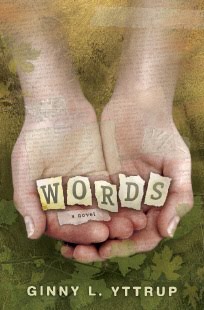
and the book:
B&H Books (February 1, 2011)
***Special thanks to Julie Gwinn, Trade Book Marketing, B&H Publishing Group for sending me a review copy.***My Review:
From the first sentence, I knew it was going to be one of those that I wouldn't be able to put down, had to keep reading to find out what would happen to this little girl!! A powerful heart wrenching story of a little girl that is rescued by a young woman. They both have psychological trauma and a haunting history and with lots of love, patience and the power of prayer, they end up helping each other to deal with their past . You'll definitely need your box of tissue!!
I highly recommend it.
ABOUT THE AUTHOR:
From the first sentence, I knew it was going to be one of those that I wouldn't be able to put down, had to keep reading to find out what would happen to this little girl!! A powerful heart wrenching story of a little girl that is rescued by a young woman. They both have psychological trauma and a haunting history and with lots of love, patience and the power of prayer, they end up helping each other to deal with their past . You'll definitely need your box of tissue!!
I highly recommend it.
ABOUT THE AUTHOR:
 Ginny L. Yttrup is an accomplished freelance writer, speaker, and life coach who also ministers to women wounded by sexual trauma. Her blogs include Fiction Creator, My Daily Light, and Crossings Life Coaching. She has two grown sons and lives in California. Words
 is her first novel.
Visit the author's website.
SHORT BOOK DESCRIPTION:
“I collect words. I keep them in a box in my mind. Whenever I wanted, I’d open the box and pick up the papers, reading and feeling the words all at once. Then I could hide the box. But the words are safer in my mind. There, he can’t take them.”
Ten-year old Kaylee Wren doesn’t speak. Not since her drug-addled mother walked away, leaving her in a remote cabin nestled in the towering redwoods-in the care of a man who is as dangerous as he is evil. With silence her only refuge, Kaylee collects words she might never speak from the only memento her mother left behind: a dictionary.
Sierra Dawn is thirty-four, an artist, and alone. She has allowed the shame of her past to silence her present hopes and chooses to bury her pain by trying to control her circumstances. But on the twelfth anniversary of her daughter’s death, Sierra’s control begins to crumble as the God of her childhood woos her back to Himself.
Brought together by Divine design, Kaylee and Sierra will discover together the healing mercy of the Word—Jesus Christ.
Product Details:
List Price: $14.99
Paperback: 352 pages
Publisher: B&H Books (February 1, 2011)
Language: English
ISBN-10: 1433671700
ISBN-13: 978-1433671708
AND NOW...THE FIRST CHAPTER:
“In the beginning was the Word.”
John 1:1
“All those things for which we have no words are lost. The mind—the culture—has two little tools, grammar and lexicon: a decorated sand bucket and a matching shovel. With these we bluster about the continents and do all the world’s work. With these we try to save our very lives.”
Annie Dillard
Chapter One
Kaylee
I collect words.
I keep them in a box in my mind. I’d like to keep them in a real box, something pretty, maybe a shoe box covered with flowered wrapping paper. I’d write my words on scraps of paper and then put them in the box. Whenever I wanted, I’d open the box and pick up the papers, reading and feeling the words all at once. Then I could hide the box.
But the words are safer in my mind. There, he can’t take them.
The dictionary is heavy on my lap. I’m on page 1,908. I’m reading through the Ss. When I finish the Zs, I’ll start all over again.
Su-per-flu-ous.
I like that word. It means something extra, something special, something you don’t need. It’s super. But you don’t need super. You just need good enough.
How does it sound when someone says it?
I didn’t really think about how words sound until I stopped talking. I didn’t mean to stop talking, it just sort of happened.
My mom left.
I got scared.
And the words got stuck.
Now I just read the words and then listen for them on the little radio in the kitchen, the only superfluous thing we have.
As I read, my hair falls across my eyes. I push it out of the way, but it falls back. I push it out of the way again, but this time my fingers catch in a tangle. I work for a minute trying to separate the hairs and smooth them down.
When my mom was here, she combed my hair most mornings. Our hair is the same. “Stick straight and dark as soot.” That’s what she used to say.
It hurt when she pulled the comb through my hair. “Kaylee, stop squirming,” she’d tell me. “It’ll pull more if you move.”
Sometimes I’d cry when the comb caught in a knot and she’d get impatient and tell me to stop whining.
Maybe that’s why she left. Maybe she got tired of my whining.
That’s what he says. He tells me she didn’t love me anymore—that she wanted out. But I don’t believe him. I think something happened to her, an accident or something.
She probably has amnesia. I read that word in the dictionary.
That’s when you hit your head so hard on something that you pass out and have to go to the hospital and when you wake up, you don’t remember anything. Not even your name.
Not even that you have a daughter.
I think that’s what happened to my mom. When she remembers, she’ll come back and get me.
So I just wait. I won’t leave. If I leave, she won’t know where to find me.
And when she comes back, I’ll be good. I won’t whine anymore.
I was nine when she left. Now, I’m ten. I’ll be eleven the day after Christmas. I always know it’s near my birthday when they start playing all the bell songs on the radio. I like Silver Bells. I like to think about the city sidewalks and all the people dressed in holiday style. But Jingle Bells is my favorite. Dashing through the snow on a one-horse open sleigh sounds fun.
It’s not near my birthday yet. It’s still warm outside.
As the sun sets, the cabin gets dark inside, too dark to read. He didn’t pay the electric bill, again. I hope he pays it before Christmas or I won’t hear the songs on the radio.
Before I put the dictionary away, I turn to the front page and run my fingers across the writing scribbled there. “Lee and Katherine Wren. Congratulations.
Lee and Katherine are my parents. Were my parents. Are my parents. I’m not sure.
My mom told me that the dictionary was a gift from her Aunt Adele. Mom thought it was kind of a funny wedding gift, but she liked it and kept it even after Lee left. We used it a lot. Sometimes when I’d ask her a question about what something was or what something meant, she’d say, “Go get the dictionary Kaylee, we’ll look it up.” Then she’d show me how to find the word, and we’d read the definition. Most of the time she’d make me sound out the words and read them to her. Only sometimes did she read them to me. But most of the time when I asked her a question, she told me to be quiet. She liked it best when I was quiet.
I miss my mom. But the dictionary makes me feel like part of her is still here. While she’s gone, the dictionary is mine. I have to take care of it. So just like I always do before I put the book away, I ask a silent favor: Please don’t let him notice it. Please don’t let him take it.
I put the dictionary back under the board that makes up a crooked shelf. The splintered wood pricks the tip of one finger as I lift the board and shove the dictionary under. The shelf is supported on one end by two cinderblocks and by one cinderblock and three books on the other end.
I remember the day she set up the shelf. I followed her out the front door and down the steps, and then watched her kneel in the dirt and pull out three concrete blocks she’d found under the steps. She dusted dirt and cobwebs from the cracks and then carried each block inside. She stacked two blocks one on top of the other at one end of the room and then spaced the last block at the other end of the room, under the window.
“Kaylee, hand me a few books from that box. Get big ones.”
I reached into the box and pulled out the biggest book—the dictionary. Then I handed her the other two books. She stacked them on top of the block and then laid a board across the books and blocks.
Even at seven, I knew what she was doing. We’d move in with a boyfriend and Mom would get us “settled” which meant she’d move in our things—our clothes, books, and a few toys for me. She’d rearrange the apartment, or house—or this time, the cabin—and make it “homey.”
After she made the shelf, she lined up our books. Then she placed a vase of wildflowers we’d collected that morning on the end of the shelf. She stood back and looked at what she’d done. Her smile told me she liked it.
The cabin was small, but of all the places we’d lived, I could tell this was her favorite. And this boyfriend seemed nice enough at first, so I hoped maybe we’d stay this time.
We did stay. Or at least I stayed. So now I’m the one arranging the shelf and I’m careful to put it back just as it was. Our books are gone. In their place I return two beer bottles, one with a sharp edge of broken glass, to their dust-free circles on the shelf. I pick up the long-empty bag of Frito Lay corn chips and, before leaning the bag against the broken bottle, I hold it open close to my face and breathe in. The smell of corn and salt make my stomach growl.
Once I’m sure everything looks just as it was on the shelf, I crawl to my mattress in the corner of the room and sit, Indian-style, with my back against the wall and watch the shadows. Light shines between the boards across the broken front window; shadows of leaves and branches move across the walls, ceiling, and door. Above my head I hear a rat or squirrel on the roof. Its movement scatters pine needles and something—a pinecone, I imagine—rolls from the top of the roof, over my head, and then drops into the bed of fallen needles around the front steps.
This is the longest part of the day—when it’s too dark to read.
When I read…
I forget.
That’s how it works.
Once the sun goes down, I don’t leave the cabin. I’m afraid he’ll come back after work and find me gone. He’s told me not to leave because he’d find me and I’d be sorry.
I believe him. believe --verb 1. to take as true, real, etc. 2. to have confidence in a statement or promise of (another person).
My legs go numb under my body and my eyes feel heavy, but I don’t sleep. Sleep isn’t safe. Instead, I close my eyes for just a minute and see flames against the backs of my eyelids. They burn everything my mom and I brought to the cabin.
I remember the hissing and popping as the nighttime drizzle hit the bonfire. And I remember his laughter.
“She’s gone for good, Kaylee. She ain’t comin back.” He cackled like an old witch as he threw more gasoline on the flames.
The smoke filled my nose and stung my lungs as I watched Lamby, the stuffed animal I’d slept with since I was a baby, burn along with most of our clothes and books.
The only exceptions were the three books he hadn’t noticed holding up the shelf. My tears couldn’t put out the fire, and I finally stopped crying. I wiped my nose on my sleeve and stepped away from the blaze. I squared my shoulders and stood as tall as I could. Something changed in me that night. I couldn’t be little anymore. I had to be grown up.
I open my eyes and reach my hand under the corner of the mattress. My fingers dig into the hole in the canvas, feeling for the music box that had been inside Lamby. I’d found it in the ashes the morning after the fire. I tug it free, then wind the key and hold it up to my ear. As the music plays, I remember the words of the song that Grammy taught me just before she died. Jesus loves me, this I know…
The song makes me feel sad.
I don’t think Jesus loves me anymore.
Eventually, I must fall asleep, because I wake up startled—mouth dry, palms damp, and my heart pounding.
I hear the noise that woke me, the crunching of leaves and pine needles. I listen. Are his steps steady, even? No. Two steps. Pause. A dragging sound. Pause. A thud as he stumbles. Pause. Will he get up? Or has he passed out? Please let him be out. A metal taste fills my mouth as I hear him struggle to get back on his feet.
“Kay—leeee?” He slurs. “You up? Lemme in.”
He bangs his fist on the front door, which hasn’t locked or even shut tight since the night he aimed his .22 at the doorknob and blew it to pieces.
The door gives way under the pressure of his fist. As it swings open, he pounds again but misses and falls into the cabin. He goes straight down and hits the floor, head first. A gurgling sound comes from his throat, and I smell the vomit before I see it pooled around his face.
I hope he’ll drown in it.
But he won’t die tonight.
Instead, he heaves himself onto his back and reaches for the split on his forehead where, even in the dark, I can see the blood trickling into his left eye. Then his hand slides down past his ear and drops to the floor. At the sound of his snoring, I exhale. I realize I’ve been holding my breath. Waiting…waiting…waiting.
Chapter Two
Sierra
Cocooned in crocheted warmth, I slip my hands from beneath the afghan and reach for my journal—a notebook filled with snippets of feelings and phrases. I jot a line: Like shards of glass slivering my soul. I set pen and journal aside and warm my hands around my ritual mug of Earl Gray, considering the phrase. I like the cadence of the alliteration. I see shining slivers piercing an ambiguous soul. I see a canvas layered in hues of red, russet, and black.
A memory calls my name, but I turn away. There will be time for memories later.
I close my eyes against the flame of color igniting the morning sky and allow my body the luxury of relaxing. I breathe deep intentional breaths, exhaling slowly, allowing mind and body to find a like rhythm. With each breath I let go, one by one, the anxieties of the past week.
Prints—signed and numbered. Five hundred in all.
Contract negotiations with two new galleries. Done.
Showing in Carmel last night. Successful.
Mortgage paid. On time for once.
Van Gogh neutered. What did the vet say? “He’s lost his manhood—be gentle with him. He’ll need a few days to recoup.” Good grief.
A whimper interrupts my reverie. The afghan unfurls as I get up and pad across the deck back into the bungalow. Van presses his nose through the cross-hatch door of his crate—his woeful expression speaking volumes. I open the cage and the spry mutt I met at the shelter a few days before staggers toward the deck, tail between his legs. I translate his body language as utter humiliation and feel guilty for my responsible choice.
“Sorry pal, it’s the only way I could spring you from the shelter. They made me do it.” His ears perk and then droop. His salt and pepper coat bristles against my hand, while his ears are cashmere soft. He sighs and drifts back to sleep while I wonder at the wisdom of adopting an animal that’s already getting under my skin. I consider packing him up and taking him back before it’s too late. Instead, I brace myself and concede “Okay, I’ll love you—but just a little.” He twitches in response.
The distant throttle of fishing boats leaving the harbor and the bickering of gulls overhead break the morning silence followed by the ringing of the phone. I smile and reach for the phone lying under my journal.
“Hi, Margaret.” No need to answer with a questioning “Hello?” There’s only one person I know who dares calling at 7:00 a.m. on a Saturday.
Laughter sings through the phone line. “Shannon, when are you going to stop calling me Margaret?”
I dubbed her that after the indomitable Margaret Thatcher, prime minister of her homeland. Her unwavering British accent, even after nearly half a century in the United States, and her strength under pressure inspired the nickname. It fits.
“Well, as I’ve told you, I’ll stop calling you Margaret when you stop calling me Shannon. Need I remind you that I haven’t been Shannon in over a decade?”
“Oh, right. Let’s see, what is your name now? Sahara Dust? Sequoia Dew?”
I play along. “Does Sierra Dawn ring a bell?”
“Right, Sierra Dawn, beautiful name. But you’ll always be Shannon Diane to me.”
The smile in her voice chases the shadows from my heart. “Okay, Mother. I mean Margaret.” I pull my knees to my chest and reach for the afghan as I settle back in the weathered Adirondack for our conversation.
“Sierra, I didn’t wake you, did I?”
“Of course not. What is it you say, ‘You can take the girl out of the farm, but you can’t take the farm out of the girl.’”
“That’s my girl. Your daddy’s been out in the fields since 6:00 but he let me sleep. I just got up and thought I’d share a cup of tea with you.”
I do a quick pacific/central time conversion and realize with some alarm that it’s 9:00 a.m. in Texas.
“You slept until 9:00? You never sleep that late. What’s wrong?”
“Nothing’s wrong, darling, I’m simply getting old. I had to get up three times during the night and by this morning I just wanted to sleep. So I indulged.”
“Well, good for you. I’m glad you called. You know my favorite Saturday mornings are spent with you and Earl.”
“I’m not drinking Earl.”
A startling confession. “You’re not? What are you drinking?”
“Sierra, I’m drinking Lemon Zinger!” Her declaration is followed by a giggle that sounds anything but old.
I stretch my long legs and cross them at the ankles and lean my head against the back of the chair. I feel as though my mother, with gentle skill, has distracted me while she’s worked to remove a few of those slivers imbedded in my soul. But unless I stop brushing up against my splintered history, the slivers will return—or so she tells me.
Just before we hang up, she says, “Shannon—” there’s such tenderness in her voice that I let the slip pass— “are you going to the cemetery today?”
Her question tears open the wound, exposing the underlying infection. I imagine her practicality won’t allow her to leave the wound festering any longer; instead she lances my heart.
I lean forward. “Yes, Mother. You know I will.” My tone is tight, closed. But I can’t seem to help it.
“Darling, it’s time to let go—it’s been twelve years. It’s time to grasp grace and move on.”
The fringe of the afghan I’ve played with as we’ve talked is now twisted tight around my index finger, cutting off the circulation. “What are you saying? That I should just forget—just let go and walk away— never think about it again? You know I can’t do that.”
“Not forget, Sierra— forgive. It’s time.”
“Mother, you know I don’t want to talk about this.”
“Yes, I know. But you need to at least think about it. Think about the truth. Ask yourself what’s true.”
I sigh at my mother’s oft repeated words and grunt my consent before I hang up— or “ring off” as she would say.
I left Texas at eighteen and headed to California, sure that was where I’d “find myself.” On the day I left, my daddy stood at the driver’s door of my overstuffed used station wagon gazing at the hundreds of acres of soil he’d readied for planting in the fall and gave me what I think of now as my own “Great Commission.” In the vernacular of the Bible Belt, my daddy, a farmer with the soul of a poet, sent me out into the world with a purpose.
“Honey, do you know why I farm?”
At eighteen I’d never considered the “why” of what my parents did. “No, Daddy. Why?”
“Farming’s not something that can be done alone. I till the ground, plant the seeds, and irrigate. But it’s the rising and setting of the sun and the changing of the seasons that cause the grain to grow. Farming is a partnership with the Creator. Each year when I reap the harvest, I marvel at a Creator who allows me the honor of co-creating with him.”
He’d stopped staring at the fields and instead looked straight at me. “Look for what the Creator wants you to do, Shannon. He wants to share his creativity with you. He wants to partner with you. You find what he wants you to do.”
With that, he planted a kiss on my forehead and shut the door of my car. With my daddy’s commission tucked in my heart, I left in search of my life. My older brother, Jeff, was already in California completing his final year in the agricultural school at Cal-Poly in San Luis Obispo. Tired of dorm life, Jeff and two friends rented a house in town and told me I could rent a room from them for the year. I was thrilled.
Our neighbors and Mother and Daddy’s friends couldn’t understand why they’d let me “run off” to California. In their minds, California was a dark place where drugs and sex ruled. But Daddy assured them California was not the Sodom and Gomorrah they imagined. He should know. His roots were in California. He was born and raised there. Jeff and I grew up hearing about the Golden State and were determined we’d see it for ourselves one day. College in California seemed a logical choice to both of us.
As I headed west, I thought of my parents and what I’d learned from each of them through the years. Daddy taught me to see. Where others in our community saw grain, Daddy saw God. He always encouraged me in his quiet and simple way to look beyond the obvious. “Look beyond a person’s actions and see their heart. Look for what’s causing them to act the way they act, then you’ll understand them better.”
When I was about twelve, Mother and Daddy took us with them down to Galveston for a week. Daddy was there for an American Farm Bureau meeting. After the meeting, we stayed for a few rare days of vacation. I remember standing on the beach and looking out at the flat sea, Daddy pulled me close and pointed at the surf and asked, “What do you see?”
“The ocean?” I asked it more than stated.
“Yes, but there’s more. You’re seeing God’s power.”
I must have seemed unimpressed because Daddy laughed. “It’s there Shan, someday you’ll see it. But, I’ll admit it’s easier to see it in the crashing surf and jagged cliffs of the California coastline.”
I didn’t understand what he meant then—and I’m still not sure I fully understand—but back then my daddy’s description of the California coastline followed me as I was off to see it for myself.
My mother taught me to look for something else. “What’s the truth, Shannon?” she’d ask over and over, challenging me to choose what was right. She taught me to analyze a situation and then make a decision that represented the truth foundational to our family.
Most often the truth she spoke of was found in the big family Bible she’d brought with her from England. She’d lay the book out on the kitchen table and open it to the book of John in the New Testament and she’d read from the King James version: “And ye shall know the truth, and the truth shall make you free.”
“There’s freedom in the truth, Shannon. You remember that,” she’d say.
Again, I’m only now beginning to understand what she meant. But these were the lessons from home that I carried with me to California.
So why hadn’t I applied those lessons? Why I had I wandered so far from my parents’ truth?
Those are questions I’d ask myself many times over. I’d yet to find the answers.
John 1:1
“All those things for which we have no words are lost. The mind—the culture—has two little tools, grammar and lexicon: a decorated sand bucket and a matching shovel. With these we bluster about the continents and do all the world’s work. With these we try to save our very lives.”
Annie Dillard
Chapter One
Kaylee
I collect words.
I keep them in a box in my mind. I’d like to keep them in a real box, something pretty, maybe a shoe box covered with flowered wrapping paper. I’d write my words on scraps of paper and then put them in the box. Whenever I wanted, I’d open the box and pick up the papers, reading and feeling the words all at once. Then I could hide the box.
But the words are safer in my mind. There, he can’t take them.
The dictionary is heavy on my lap. I’m on page 1,908. I’m reading through the Ss. When I finish the Zs, I’ll start all over again.
Su-per-flu-ous.
I like that word. It means something extra, something special, something you don’t need. It’s super. But you don’t need super. You just need good enough.
How does it sound when someone says it?
I didn’t really think about how words sound until I stopped talking. I didn’t mean to stop talking, it just sort of happened.
My mom left.
I got scared.
And the words got stuck.
Now I just read the words and then listen for them on the little radio in the kitchen, the only superfluous thing we have.
As I read, my hair falls across my eyes. I push it out of the way, but it falls back. I push it out of the way again, but this time my fingers catch in a tangle. I work for a minute trying to separate the hairs and smooth them down.
When my mom was here, she combed my hair most mornings. Our hair is the same. “Stick straight and dark as soot.” That’s what she used to say.
It hurt when she pulled the comb through my hair. “Kaylee, stop squirming,” she’d tell me. “It’ll pull more if you move.”
Sometimes I’d cry when the comb caught in a knot and she’d get impatient and tell me to stop whining.
Maybe that’s why she left. Maybe she got tired of my whining.
That’s what he says. He tells me she didn’t love me anymore—that she wanted out. But I don’t believe him. I think something happened to her, an accident or something.
She probably has amnesia. I read that word in the dictionary.
That’s when you hit your head so hard on something that you pass out and have to go to the hospital and when you wake up, you don’t remember anything. Not even your name.
Not even that you have a daughter.
I think that’s what happened to my mom. When she remembers, she’ll come back and get me.
So I just wait. I won’t leave. If I leave, she won’t know where to find me.
And when she comes back, I’ll be good. I won’t whine anymore.
I was nine when she left. Now, I’m ten. I’ll be eleven the day after Christmas. I always know it’s near my birthday when they start playing all the bell songs on the radio. I like Silver Bells. I like to think about the city sidewalks and all the people dressed in holiday style. But Jingle Bells is my favorite. Dashing through the snow on a one-horse open sleigh sounds fun.
It’s not near my birthday yet. It’s still warm outside.
As the sun sets, the cabin gets dark inside, too dark to read. He didn’t pay the electric bill, again. I hope he pays it before Christmas or I won’t hear the songs on the radio.
Before I put the dictionary away, I turn to the front page and run my fingers across the writing scribbled there. “Lee and Katherine Wren. Congratulations.
Lee and Katherine are my parents. Were my parents. Are my parents. I’m not sure.
My mom told me that the dictionary was a gift from her Aunt Adele. Mom thought it was kind of a funny wedding gift, but she liked it and kept it even after Lee left. We used it a lot. Sometimes when I’d ask her a question about what something was or what something meant, she’d say, “Go get the dictionary Kaylee, we’ll look it up.” Then she’d show me how to find the word, and we’d read the definition. Most of the time she’d make me sound out the words and read them to her. Only sometimes did she read them to me. But most of the time when I asked her a question, she told me to be quiet. She liked it best when I was quiet.
I miss my mom. But the dictionary makes me feel like part of her is still here. While she’s gone, the dictionary is mine. I have to take care of it. So just like I always do before I put the book away, I ask a silent favor: Please don’t let him notice it. Please don’t let him take it.
I put the dictionary back under the board that makes up a crooked shelf. The splintered wood pricks the tip of one finger as I lift the board and shove the dictionary under. The shelf is supported on one end by two cinderblocks and by one cinderblock and three books on the other end.
I remember the day she set up the shelf. I followed her out the front door and down the steps, and then watched her kneel in the dirt and pull out three concrete blocks she’d found under the steps. She dusted dirt and cobwebs from the cracks and then carried each block inside. She stacked two blocks one on top of the other at one end of the room and then spaced the last block at the other end of the room, under the window.
“Kaylee, hand me a few books from that box. Get big ones.”
I reached into the box and pulled out the biggest book—the dictionary. Then I handed her the other two books. She stacked them on top of the block and then laid a board across the books and blocks.
Even at seven, I knew what she was doing. We’d move in with a boyfriend and Mom would get us “settled” which meant she’d move in our things—our clothes, books, and a few toys for me. She’d rearrange the apartment, or house—or this time, the cabin—and make it “homey.”
After she made the shelf, she lined up our books. Then she placed a vase of wildflowers we’d collected that morning on the end of the shelf. She stood back and looked at what she’d done. Her smile told me she liked it.
The cabin was small, but of all the places we’d lived, I could tell this was her favorite. And this boyfriend seemed nice enough at first, so I hoped maybe we’d stay this time.
We did stay. Or at least I stayed. So now I’m the one arranging the shelf and I’m careful to put it back just as it was. Our books are gone. In their place I return two beer bottles, one with a sharp edge of broken glass, to their dust-free circles on the shelf. I pick up the long-empty bag of Frito Lay corn chips and, before leaning the bag against the broken bottle, I hold it open close to my face and breathe in. The smell of corn and salt make my stomach growl.
Once I’m sure everything looks just as it was on the shelf, I crawl to my mattress in the corner of the room and sit, Indian-style, with my back against the wall and watch the shadows. Light shines between the boards across the broken front window; shadows of leaves and branches move across the walls, ceiling, and door. Above my head I hear a rat or squirrel on the roof. Its movement scatters pine needles and something—a pinecone, I imagine—rolls from the top of the roof, over my head, and then drops into the bed of fallen needles around the front steps.
This is the longest part of the day—when it’s too dark to read.
When I read…
I forget.
That’s how it works.
Once the sun goes down, I don’t leave the cabin. I’m afraid he’ll come back after work and find me gone. He’s told me not to leave because he’d find me and I’d be sorry.
I believe him. believe --verb 1. to take as true, real, etc. 2. to have confidence in a statement or promise of (another person).
My legs go numb under my body and my eyes feel heavy, but I don’t sleep. Sleep isn’t safe. Instead, I close my eyes for just a minute and see flames against the backs of my eyelids. They burn everything my mom and I brought to the cabin.
I remember the hissing and popping as the nighttime drizzle hit the bonfire. And I remember his laughter.
“She’s gone for good, Kaylee. She ain’t comin back.” He cackled like an old witch as he threw more gasoline on the flames.
The smoke filled my nose and stung my lungs as I watched Lamby, the stuffed animal I’d slept with since I was a baby, burn along with most of our clothes and books.
The only exceptions were the three books he hadn’t noticed holding up the shelf. My tears couldn’t put out the fire, and I finally stopped crying. I wiped my nose on my sleeve and stepped away from the blaze. I squared my shoulders and stood as tall as I could. Something changed in me that night. I couldn’t be little anymore. I had to be grown up.
I open my eyes and reach my hand under the corner of the mattress. My fingers dig into the hole in the canvas, feeling for the music box that had been inside Lamby. I’d found it in the ashes the morning after the fire. I tug it free, then wind the key and hold it up to my ear. As the music plays, I remember the words of the song that Grammy taught me just before she died. Jesus loves me, this I know…
The song makes me feel sad.
I don’t think Jesus loves me anymore.
Eventually, I must fall asleep, because I wake up startled—mouth dry, palms damp, and my heart pounding.
I hear the noise that woke me, the crunching of leaves and pine needles. I listen. Are his steps steady, even? No. Two steps. Pause. A dragging sound. Pause. A thud as he stumbles. Pause. Will he get up? Or has he passed out? Please let him be out. A metal taste fills my mouth as I hear him struggle to get back on his feet.
“Kay—leeee?” He slurs. “You up? Lemme in.”
He bangs his fist on the front door, which hasn’t locked or even shut tight since the night he aimed his .22 at the doorknob and blew it to pieces.
The door gives way under the pressure of his fist. As it swings open, he pounds again but misses and falls into the cabin. He goes straight down and hits the floor, head first. A gurgling sound comes from his throat, and I smell the vomit before I see it pooled around his face.
I hope he’ll drown in it.
But he won’t die tonight.
Instead, he heaves himself onto his back and reaches for the split on his forehead where, even in the dark, I can see the blood trickling into his left eye. Then his hand slides down past his ear and drops to the floor. At the sound of his snoring, I exhale. I realize I’ve been holding my breath. Waiting…waiting…waiting.
Chapter Two
Sierra
Cocooned in crocheted warmth, I slip my hands from beneath the afghan and reach for my journal—a notebook filled with snippets of feelings and phrases. I jot a line: Like shards of glass slivering my soul. I set pen and journal aside and warm my hands around my ritual mug of Earl Gray, considering the phrase. I like the cadence of the alliteration. I see shining slivers piercing an ambiguous soul. I see a canvas layered in hues of red, russet, and black.
A memory calls my name, but I turn away. There will be time for memories later.
I close my eyes against the flame of color igniting the morning sky and allow my body the luxury of relaxing. I breathe deep intentional breaths, exhaling slowly, allowing mind and body to find a like rhythm. With each breath I let go, one by one, the anxieties of the past week.
Prints—signed and numbered. Five hundred in all.
Contract negotiations with two new galleries. Done.
Showing in Carmel last night. Successful.
Mortgage paid. On time for once.
Van Gogh neutered. What did the vet say? “He’s lost his manhood—be gentle with him. He’ll need a few days to recoup.” Good grief.
A whimper interrupts my reverie. The afghan unfurls as I get up and pad across the deck back into the bungalow. Van presses his nose through the cross-hatch door of his crate—his woeful expression speaking volumes. I open the cage and the spry mutt I met at the shelter a few days before staggers toward the deck, tail between his legs. I translate his body language as utter humiliation and feel guilty for my responsible choice.
“Sorry pal, it’s the only way I could spring you from the shelter. They made me do it.” His ears perk and then droop. His salt and pepper coat bristles against my hand, while his ears are cashmere soft. He sighs and drifts back to sleep while I wonder at the wisdom of adopting an animal that’s already getting under my skin. I consider packing him up and taking him back before it’s too late. Instead, I brace myself and concede “Okay, I’ll love you—but just a little.” He twitches in response.
The distant throttle of fishing boats leaving the harbor and the bickering of gulls overhead break the morning silence followed by the ringing of the phone. I smile and reach for the phone lying under my journal.
“Hi, Margaret.” No need to answer with a questioning “Hello?” There’s only one person I know who dares calling at 7:00 a.m. on a Saturday.
Laughter sings through the phone line. “Shannon, when are you going to stop calling me Margaret?”
I dubbed her that after the indomitable Margaret Thatcher, prime minister of her homeland. Her unwavering British accent, even after nearly half a century in the United States, and her strength under pressure inspired the nickname. It fits.
“Well, as I’ve told you, I’ll stop calling you Margaret when you stop calling me Shannon. Need I remind you that I haven’t been Shannon in over a decade?”
“Oh, right. Let’s see, what is your name now? Sahara Dust? Sequoia Dew?”
I play along. “Does Sierra Dawn ring a bell?”
“Right, Sierra Dawn, beautiful name. But you’ll always be Shannon Diane to me.”
The smile in her voice chases the shadows from my heart. “Okay, Mother. I mean Margaret.” I pull my knees to my chest and reach for the afghan as I settle back in the weathered Adirondack for our conversation.
“Sierra, I didn’t wake you, did I?”
“Of course not. What is it you say, ‘You can take the girl out of the farm, but you can’t take the farm out of the girl.’”
“That’s my girl. Your daddy’s been out in the fields since 6:00 but he let me sleep. I just got up and thought I’d share a cup of tea with you.”
I do a quick pacific/central time conversion and realize with some alarm that it’s 9:00 a.m. in Texas.
“You slept until 9:00? You never sleep that late. What’s wrong?”
“Nothing’s wrong, darling, I’m simply getting old. I had to get up three times during the night and by this morning I just wanted to sleep. So I indulged.”
“Well, good for you. I’m glad you called. You know my favorite Saturday mornings are spent with you and Earl.”
“I’m not drinking Earl.”
A startling confession. “You’re not? What are you drinking?”
“Sierra, I’m drinking Lemon Zinger!” Her declaration is followed by a giggle that sounds anything but old.
I stretch my long legs and cross them at the ankles and lean my head against the back of the chair. I feel as though my mother, with gentle skill, has distracted me while she’s worked to remove a few of those slivers imbedded in my soul. But unless I stop brushing up against my splintered history, the slivers will return—or so she tells me.
Just before we hang up, she says, “Shannon—” there’s such tenderness in her voice that I let the slip pass— “are you going to the cemetery today?”
Her question tears open the wound, exposing the underlying infection. I imagine her practicality won’t allow her to leave the wound festering any longer; instead she lances my heart.
I lean forward. “Yes, Mother. You know I will.” My tone is tight, closed. But I can’t seem to help it.
“Darling, it’s time to let go—it’s been twelve years. It’s time to grasp grace and move on.”
The fringe of the afghan I’ve played with as we’ve talked is now twisted tight around my index finger, cutting off the circulation. “What are you saying? That I should just forget—just let go and walk away— never think about it again? You know I can’t do that.”
“Not forget, Sierra— forgive. It’s time.”
“Mother, you know I don’t want to talk about this.”
“Yes, I know. But you need to at least think about it. Think about the truth. Ask yourself what’s true.”
I sigh at my mother’s oft repeated words and grunt my consent before I hang up— or “ring off” as she would say.
I left Texas at eighteen and headed to California, sure that was where I’d “find myself.” On the day I left, my daddy stood at the driver’s door of my overstuffed used station wagon gazing at the hundreds of acres of soil he’d readied for planting in the fall and gave me what I think of now as my own “Great Commission.” In the vernacular of the Bible Belt, my daddy, a farmer with the soul of a poet, sent me out into the world with a purpose.
“Honey, do you know why I farm?”
At eighteen I’d never considered the “why” of what my parents did. “No, Daddy. Why?”
“Farming’s not something that can be done alone. I till the ground, plant the seeds, and irrigate. But it’s the rising and setting of the sun and the changing of the seasons that cause the grain to grow. Farming is a partnership with the Creator. Each year when I reap the harvest, I marvel at a Creator who allows me the honor of co-creating with him.”
He’d stopped staring at the fields and instead looked straight at me. “Look for what the Creator wants you to do, Shannon. He wants to share his creativity with you. He wants to partner with you. You find what he wants you to do.”
With that, he planted a kiss on my forehead and shut the door of my car. With my daddy’s commission tucked in my heart, I left in search of my life. My older brother, Jeff, was already in California completing his final year in the agricultural school at Cal-Poly in San Luis Obispo. Tired of dorm life, Jeff and two friends rented a house in town and told me I could rent a room from them for the year. I was thrilled.
Our neighbors and Mother and Daddy’s friends couldn’t understand why they’d let me “run off” to California. In their minds, California was a dark place where drugs and sex ruled. But Daddy assured them California was not the Sodom and Gomorrah they imagined. He should know. His roots were in California. He was born and raised there. Jeff and I grew up hearing about the Golden State and were determined we’d see it for ourselves one day. College in California seemed a logical choice to both of us.
As I headed west, I thought of my parents and what I’d learned from each of them through the years. Daddy taught me to see. Where others in our community saw grain, Daddy saw God. He always encouraged me in his quiet and simple way to look beyond the obvious. “Look beyond a person’s actions and see their heart. Look for what’s causing them to act the way they act, then you’ll understand them better.”
When I was about twelve, Mother and Daddy took us with them down to Galveston for a week. Daddy was there for an American Farm Bureau meeting. After the meeting, we stayed for a few rare days of vacation. I remember standing on the beach and looking out at the flat sea, Daddy pulled me close and pointed at the surf and asked, “What do you see?”
“The ocean?” I asked it more than stated.
“Yes, but there’s more. You’re seeing God’s power.”
I must have seemed unimpressed because Daddy laughed. “It’s there Shan, someday you’ll see it. But, I’ll admit it’s easier to see it in the crashing surf and jagged cliffs of the California coastline.”
I didn’t understand what he meant then—and I’m still not sure I fully understand—but back then my daddy’s description of the California coastline followed me as I was off to see it for myself.
My mother taught me to look for something else. “What’s the truth, Shannon?” she’d ask over and over, challenging me to choose what was right. She taught me to analyze a situation and then make a decision that represented the truth foundational to our family.
Most often the truth she spoke of was found in the big family Bible she’d brought with her from England. She’d lay the book out on the kitchen table and open it to the book of John in the New Testament and she’d read from the King James version: “And ye shall know the truth, and the truth shall make you free.”
“There’s freedom in the truth, Shannon. You remember that,” she’d say.
Again, I’m only now beginning to understand what she meant. But these were the lessons from home that I carried with me to California.
So why hadn’t I applied those lessons? Why I had I wandered so far from my parents’ truth?
Those are questions I’d ask myself many times over. I’d yet to find the answers.


